Blogs
Havells Motors for Chemical Industry
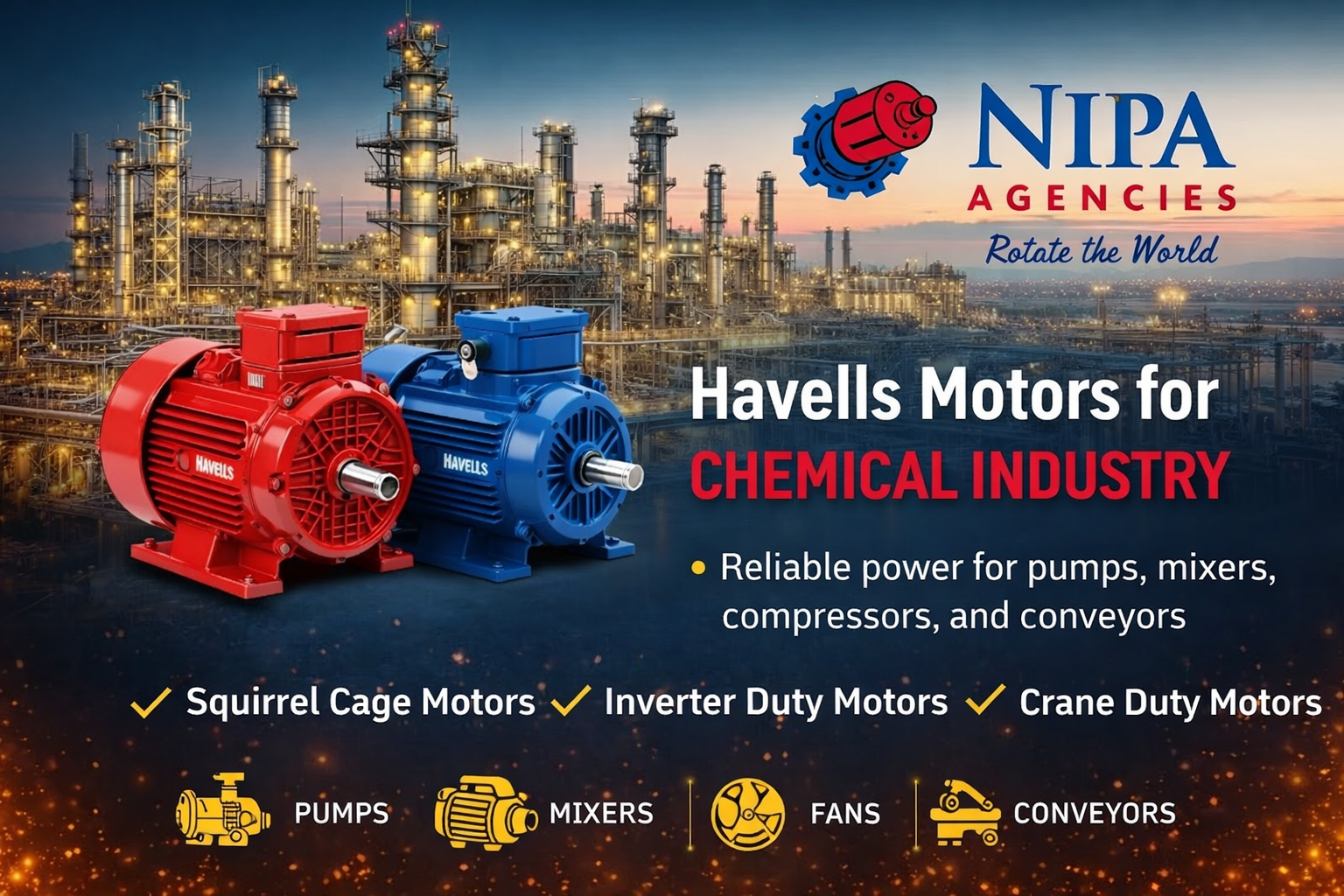
Havells Motors for
Chemical Industry
Industrial chemical processing requires highly reliable equipment capable of operating continuously in demanding environments. Chemical plants involve complex processes such as mixing, pumping, agitation, ventilation, and material handling. Each of these operations depends heavily on durable electric motors that can maintain consistent performance under varying loads and challenging operating conditions.
Havells motors for chemical industry applications are engineered to support these demanding environments by delivering dependable mechanical power for a wide range of process equipment. From pumps and compressors to agitators and conveyors, industrial motors play a critical role in ensuring smooth and uninterrupted production flow within chemical manufacturing facilities.
Modern chemical industries require motors that provide efficiency, durability, and compatibility with automated control systems. Motors used in these facilities must withstand continuous operation, temperature variations, and exposure to industrial environments while maintaining operational stability and energy efficiency.
Understanding Industrial Motor Requirements in Chemical Processing
Chemical manufacturing involves multiple stages including raw material handling, chemical reactions, separation processes, filtration, packaging, and storage. Each stage relies on specialized equipment driven by electric motors.
In such environments, industrial motors must deliver consistent torque, stable speed control, and reliable performance over extended operating periods. The efficiency and reliability of motors directly influence the productivity and safety of chemical production lines.
Motors used in chemical industry applications are expected to resist demanding operating conditions, operate continuously without interruption, and integrate with modern control technologies such as variable frequency drives. Industrial motors also play a significant role in maintaining stable process control, which is essential in chemical production where precise operating conditions must be maintained.
Industrial Applications of Havells Motors in Chemical Plants
Havells motors for chemical industry applications are commonly used to power a wide range of equipment across different processing stages. Their robust design enables them to operate efficiently in environments where reliability and continuous duty are essential.
Common applications include:
- Chemical transfer pumps used for transporting liquids and reactive compounds through pipelines
- Industrial mixers and agitators used in chemical reaction vessels
- Cooling tower fans and ventilation systems in processing plants
- Compressors used in chemical gas handling systems
- Conveyor systems for material handling and packaging
- Filtration equipment and centrifuges used in separation processes
These motors support consistent performance in chemical facilities where uninterrupted operation is essential for maintaining production efficiency.
Types of Havells Motors Used in Chemical Industry Operations
Different types of industrial motors are used depending on the operational requirements of chemical processing equipment. Each type is designed to meet specific performance and application needs.
Squirrel Cage Motors
Squirrel cage induction motors are widely used in chemical industries because of their simple construction, reliability, and low maintenance requirements. These motors are commonly applied in pumps, fans, and compressors where stable performance and long service life are essential.
Inverter Duty Motors
Inverter duty motors are designed to operate with variable frequency drives, allowing precise control of motor speed and torque. In chemical processing operations, this capability is important for regulating pumps, agitators, and conveyors according to specific process requirements.
Crane Duty Motors
Material handling systems within chemical plants often depend on crane duty motors for lifting and transporting heavy equipment or raw materials. These motors are built to handle frequent start-stop operations and varying load conditions.
Industrial Electric Motors
General-purpose industrial electric motors are used across various operations including mixers, conveyors, and ventilation systems. Their versatility makes them suitable for a broad range of chemical processing applications.
Importance of Motor Reliability in Chemical Production
In chemical manufacturing environments, equipment downtime can disrupt entire production systems. Because many chemical reactions operate continuously, motor reliability becomes critical for maintaining operational stability.
Electric motors power essential equipment such as pumps, agitators, compressors, and reactors. Any unexpected motor failure can interrupt chemical reactions, delay production schedules, and affect overall product quality.
Industrial motors used in chemical plants are therefore selected based on factors such as continuous duty capability, thermal stability, and operational efficiency. Reliable motors help maintain stable processing conditions while minimizing operational disruptions.
Energy Efficiency and Process Stability in Chemical Plants
Energy consumption is a major consideration in chemical manufacturing facilities. Large plants operate numerous motors simultaneously, powering equipment throughout different stages of production.
Energy-efficient industrial motors help reduce electricity consumption while maintaining required operational performance. Efficient motors support cost optimization while also contributing to more sustainable industrial operations by reducing overall energy waste.
Motors designed for chemical industry applications often support integration with automated control systems, enabling operators to regulate speed, torque, and energy usage based on process demands. This integration improves overall system efficiency and helps maintain consistent production output.
Operational Safety in Chemical Processing Environments
Safety is a critical concern in chemical plants due to the presence of reactive substances, elevated temperatures, and pressurized systems. Industrial equipment used in these environments must operate reliably to avoid disruptions that could compromise safety.
Electric motors used in chemical industry applications are typically designed with strong insulation systems, durable enclosures, and stable thermal performance. These characteristics support safe and dependable operation in demanding industrial environments.
Consistent motor performance ensures that equipment such as pumps and mixers operate at stable speeds, which is essential for maintaining controlled conditions during chemical reactions.
Factors to Consider When Selecting Motors for Chemical Industry
Selecting the appropriate industrial motor for chemical processing equipment requires careful evaluation of several technical and operational factors. Engineers assess the compatibility of a motor with the intended application to ensure reliable long-term performance.
Important selection considerations include:
- Load requirements and torque characteristics of the driven equipment
- Duty cycle and expected operating hours
- Compatibility with variable frequency drives
- Environmental conditions within the plant
- Cooling methods and thermal stability
- Efficiency ratings and energy performance
Choosing the correct motor configuration helps ensure that industrial equipment operates efficiently and reliably throughout the production cycle.
Maintenance Practices for Industrial Motors in Chemical Plants
Regular maintenance is essential for maintaining motor performance and preventing unexpected equipment failures. Chemical plants typically implement preventive maintenance programs to monitor motor health and operational stability.
Maintenance activities commonly include inspection of bearings, monitoring vibration levels, lubrication checks, and electrical testing. Proper maintenance practices help extend the operational lifespan of motors and ensure that processing equipment continues to function efficiently.
Monitoring motor temperature and vibration patterns can also provide early indicators of potential mechanical or electrical issues. Addressing these warning signs proactively helps maintain uninterrupted chemical production.
Future Trends in Industrial Motors for Chemical Processing
Industrial motor technology continues to evolve as chemical manufacturers increasingly adopt automation and energy optimization strategies. Modern motors are now integrated with digital monitoring systems that allow real-time performance tracking.
These systems enable plant operators to monitor parameters such as temperature, vibration, load conditions, and energy consumption. Predictive maintenance technologies further assist in identifying potential equipment issues before failures occur, helping reduce unplanned downtime.
As chemical industries continue moving toward smart manufacturing environments, electric motors will remain central to supporting automated, reliable, and energy-efficient operations.
Conclusion
Electric motors are fundamental to the operation of modern chemical manufacturing facilities. From powering pumps and mixers to supporting ventilation and material handling systems, industrial motors play a vital role in maintaining stable and efficient production processes.
Havells motors for chemical industry applications are designed to support the demanding operational needs of chemical plants by delivering reliable power, energy efficiency, and compatibility with modern industrial control systems. Their use across multiple processing stages helps maintain consistent performance and operational continuity within chemical manufacturing environments.