Blogs
NGEF Motor for Industrial Use
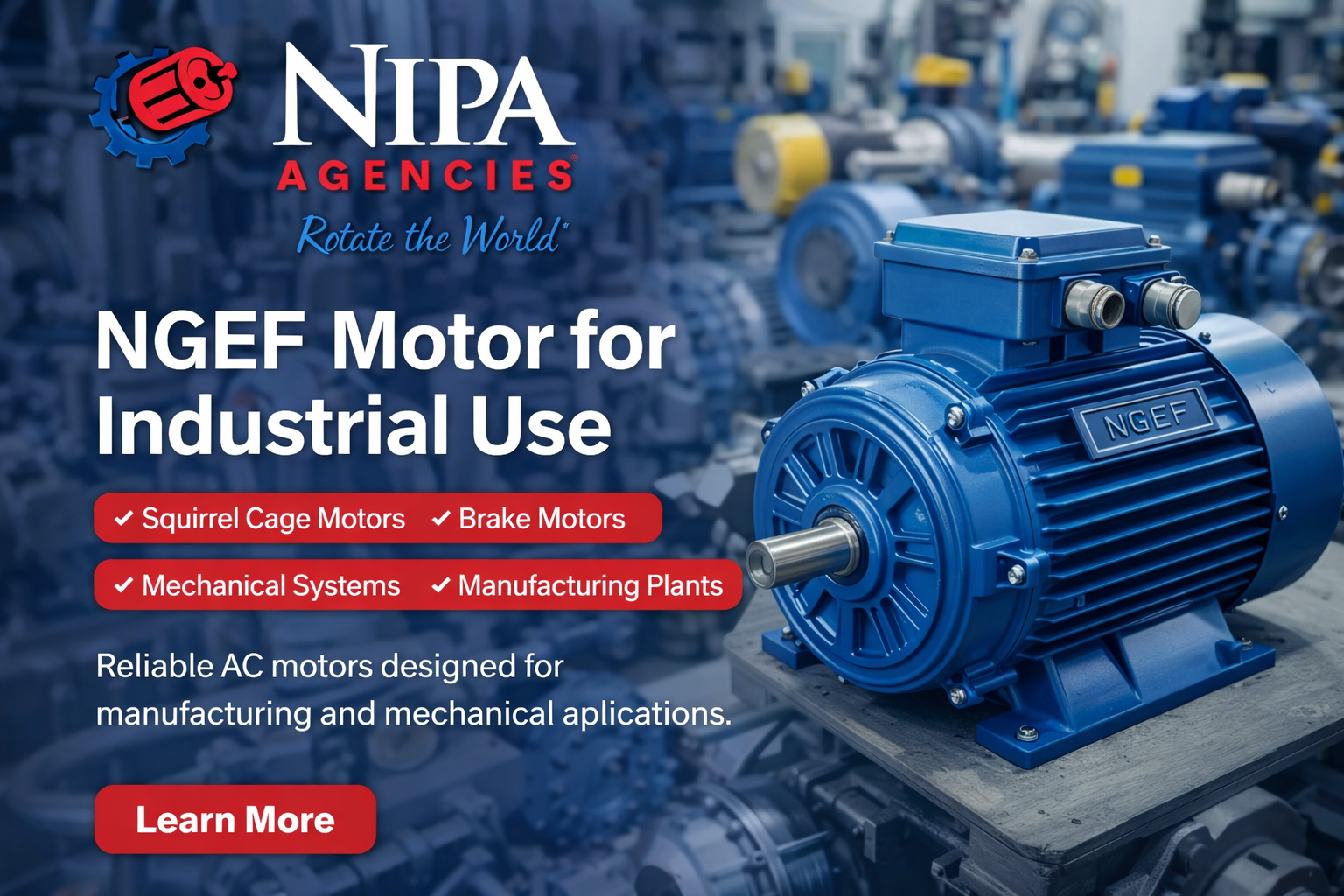
NGEF Motor for Industrial Use
Industrial operations rely heavily on dependable electric motors to operate machinery, maintain production flow, and support automation systems. One commonly used solution in manufacturing environments is the NGEF motor for industrial use. These motors are designed to perform reliably in demanding industrial conditions where consistent performance, durability, and energy efficiency are essential.
Industrial AC motors play a critical role in powering equipment used across sectors such as manufacturing, processing plants, engineering workshops, and mechanical systems. Motors in the NGEF range are recognized for their mechanical stability, dependable operation, and compatibility with a wide range of industrial machines.
NGEF motors are commonly used to drive pumps, compressors, conveyors, fans, gear systems, and other mechanical equipment. Their design allows them to operate continuously under industrial workloads while maintaining operational efficiency and controlled power consumption.
Understanding NGEF Motor for Industrial Use
An NGEF motor is an electric motor designed for industrial machinery and mechanical systems that require stable torque, rotational power, and reliable performance. These motors typically operate on alternating current and are widely used in manufacturing environments where machines must run for extended periods without interruption.
The design of NGEF motors focuses on mechanical durability, thermal stability, and efficient energy conversion. Industrial facilities often require motors capable of handling load variations and long operational cycles, and NGEF motors are engineered to support these operational demands.
Motor construction typically includes a stator, rotor assembly, shaft, bearings, cooling fan, and protective housing. These components work together to convert electrical energy into rotational mechanical energy that drives industrial equipment.
Because of their stable construction and operational reliability, NGEF motors are widely used across industrial processes where continuous movement and mechanical power are required.
Working Principle of NGEF Industrial Motors
The working principle of an NGEF motor is based on electromagnetic induction. When alternating current flows through the stator windings, it generates a rotating magnetic field that interacts with the rotor inside the motor.
As the magnetic field rotates, it induces current within the rotor conductors. The interaction between the magnetic field and the induced current creates rotational force, causing the rotor to spin. This rotational motion is transferred to the shaft, which then drives connected machinery.
The operational process follows a simple sequence:
- Electrical power enters the stator winding
- A rotating magnetic field is generated
- Magnetic interaction induces rotor current
- The rotor begins to rotate
- Mechanical energy drives industrial equipment
This operating principle allows the motor to deliver stable mechanical power for industrial machines and processing systems.
Types of NGEF Motor for Industrial Use
Industrial environments require motors designed for different load conditions and mechanical functions. NGEF motors are available in several configurations to support a variety of industrial applications.
Squirrel Cage Motor (G1 Range)
The G1 range squirrel cage motor is widely used in standard industrial operations. These motors feature a simple construction, low maintenance requirements, and dependable performance in continuous-duty environments.
They are commonly used in equipment such as pumps, blowers, compressors, and conveyors where consistent rotational speed is required.
Squirrel Cage Motor (G2 Range)
The G2 range provides improved mechanical strength and enhanced operational efficiency compared with basic motor designs. These motors are developed for more demanding industrial environments where greater durability and performance stability are necessary.
Industries operating heavy machinery often use this range for equipment that requires consistent torque and reliable operation.
Brake Motor
Brake motors combine a standard electric motor with an integrated braking system. This configuration allows machinery to stop quickly and safely when power is interrupted or when controlled stopping is required.
Brake motors are frequently used in lifting equipment, material handling systems, and automated production lines where precise stopping control is essential.
Industrial Applications of NGEF Motor for Industrial Use
NGEF motors are integrated into a wide range of industrial machines and mechanical systems. Their versatility allows them to support numerous manufacturing and process operations.
Common industrial applications include:
- Conveyor systems used in manufacturing plants
- Industrial pumps used in fluid handling processes
- Air compressors used in production facilities
- Industrial fans and ventilation equipment
- Gear-driven mechanical equipment
- Material handling machinery
- Processing equipment used in production lines
These motors provide the rotational power required to keep industrial processes operating efficiently.
Industrial Benefits of Using NGEF Motors
Industrial facilities prioritize equipment that supports reliability and operational continuity. NGEF motors are used in many systems because they deliver dependable mechanical power and stable performance in demanding environments.
Some key advantages include:
- Reliable continuous operation in industrial environments
- Strong mechanical construction supporting long service life
- Efficient energy conversion during operation
- Compatibility with a wide range of industrial machinery
- Stable torque delivery under varying load conditions
- Simple operational design with fewer mechanical complications
These characteristics make them suitable for industries that depend on electric motor-driven machinery.
Role of AC Motors in Industrial Machinery
AC motors form the foundation of most industrial mechanical systems. A large portion of industrial equipment depends on electric motors to convert electrical energy into mechanical motion.
Motors such as the NGEF motor are widely integrated into production systems where continuous movement is required. Their ability to maintain steady speed and handle varying load conditions makes them suitable for automated manufacturing environments.
Industries such as engineering manufacturing, processing plants, packaging units, and heavy mechanical workshops rely on these motors to operate machinery efficiently.
Motor reliability becomes especially critical in facilities where equipment runs for extended periods and unplanned downtime can disrupt production schedules.
Industrial Motor Selection Considerations
Selecting the correct industrial motor is an important decision within manufacturing environments. Motors must be chosen according to operational requirements, machine load, and surrounding environmental conditions.
When evaluating an industrial motor, several factors are typically considered:
- Required power capacity for the machinery
- Motor speed and torque requirements
- Cooling and ventilation design
- Duty cycle and operational duration
- Mounting configuration and mechanical compatibility
- Environmental conditions such as temperature or dust
These parameters help determine the most suitable motor configuration for specific industrial applications.
Maintenance and Operational Reliability of Industrial Motors
Proper maintenance ensures that industrial motors continue to operate efficiently over long periods. Motors used in industrial environments are often exposed to mechanical loads, temperature variations, and continuous operational cycles.
Routine maintenance practices generally include inspection of bearings, checking electrical connections, monitoring vibration levels, and ensuring adequate cooling airflow.
Regular servicing helps prevent unexpected equipment failures and contributes to stable machine performance. Many industrial facilities include motor inspections as part of their preventive maintenance programs.
Consistent maintenance practices help extend motor service life while maintaining efficient machinery operation.
Industrial Motor Distribution and Supply Systems
Industrial motors are commonly supplied through engineering distributors and electrical equipment suppliers who provide access to various motor brands and configurations. These suppliers assist industries in obtaining motors suited to their specific machinery requirements.
Distribution networks often maintain inventories of commonly used motor types such as squirrel cage motors, brake motors, and general-purpose AC motors. This helps ensure that replacement motors or new installations can be arranged without significant delays.
Industrial suppliers may also provide guidance in motor selection based on machinery specifications and operating conditions.
Industrial Growth and Demand for Electric Motors
As manufacturing industries continue to expand, the demand for reliable electric motors remains significant. Motors form the core mechanical drive systems for production equipment, processing machines, and automated manufacturing lines.
Industries across engineering, packaging, material handling, and mechanical manufacturing require motors capable of supporting continuous operations.
Advancements in motor design, improved insulation materials, and stronger mechanical construction have made modern industrial motors more durable and energy efficient.
These developments contribute to improved performance and greater operational reliability across industrial systems.
Conclusion
Industrial machinery depends on reliable electric motors to maintain consistent production and mechanical performance. The NGEF motor for industrial use plays an important role in powering equipment across manufacturing and mechanical systems.
These motors provide stable rotational power, durable construction, and compatibility with a wide range of industrial machinery. Their ability to support continuous-duty operations makes them suitable for environments where equipment must operate consistently and efficiently.
As industrial automation and manufacturing systems continue to evolve, electric motors remain essential components driving productivity and mechanical performance across modern industrial facilities.