Blogs
NGEF Industrial Motors in Gujarat
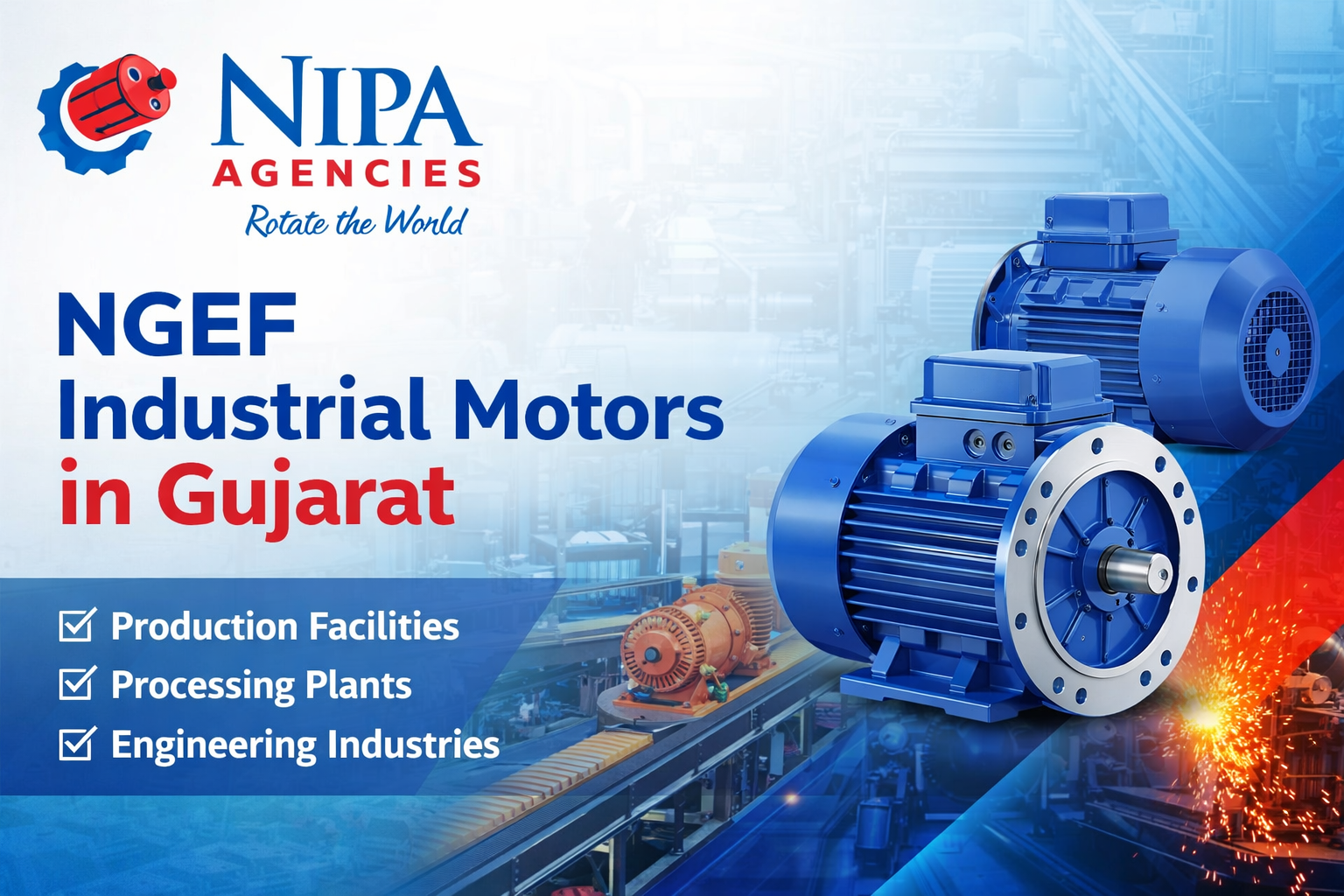
NGEF Industrial Motors in Gujarat
Industrial machinery across manufacturing sectors relies heavily on dependable electric motor systems for efficient mechanical power transmission. In modern industrial operations, AC motors are widely used because of their durability, energy efficiency, and ability to operate continuously in demanding environments. NGEF industrial motors in Gujarat are commonly utilized across production facilities, processing plants, and engineering industries where stable motor performance is essential for consistent manufacturing operations.
Industrial AC motors play a critical role in powering equipment such as pumps, conveyors, compressors, mixers, blowers, and processing machines. These motors convert electrical energy into mechanical motion, allowing machines to perform continuous operational tasks in manufacturing facilities. Since industrial systems often run for long hours and under varying load conditions, high-quality electric motors are necessary to maintain reliability and operational efficiency.
In Gujarat, where manufacturing is widely established across sectors such as chemicals, textiles, engineering, pharmaceuticals, and plastics, electric motors form the backbone of mechanical production systems. Industries depend on robust motor systems capable of delivering consistent torque, stable rotation, and long service life, even in demanding operating environments.
Motor Technology
Understanding NGEF Industrial Motor Technology
An industrial AC motor functions by converting alternating current electrical energy into rotational mechanical energy. When electrical current flows through the stator windings, it generates a rotating magnetic field. This magnetic field interacts with the rotor inside the motor housing, producing torque that drives the rotor shaft.
The rotating shaft is connected to mechanical equipment, enabling the motor to power a wide range of industrial machines. The simplicity and durability of AC motor design make it one of the most widely used motor technologies in industrial automation and manufacturing processes.
NGEF industrial motors are designed to handle continuous industrial workloads while maintaining efficiency across different applications. Their construction typically includes insulated copper windings, laminated stator cores, and precision-balanced rotors that ensure smooth mechanical rotation and stable power delivery.
Because industrial operations often run for extended periods, motors must maintain consistent performance while minimizing overheating and mechanical stress. Proper insulation systems, effective cooling methods, and robust housing designs contribute significantly to long-term motor reliability.
Manufacturing Role
Role of AC Motors in Industrial Manufacturing
Industrial AC motors serve as the primary driving force for many machines used in production facilities. In manufacturing plants, these motors enable the movement of mechanical components responsible for material handling, product processing, and automated assembly.
Production lines rely on electric motors to maintain synchronized movement of machinery components. Whether operating conveyor belts in packaging plants or powering pumps in chemical processing systems, motors help ensure that equipment functions efficiently and without interruptions.
In Gujarat's industrial ecosystem, factories operate numerous machines simultaneously. Motors supply the mechanical energy required to run these systems while maintaining production speed and operational stability.
The reliability of industrial motors directly impacts manufacturing productivity. Consistent motor performance helps reduce downtime, improves equipment efficiency, and ensures that industrial processes continue without disruption.
Motor Types
Types of Industrial AC Motors Used in Manufacturing
Industrial electric motors are available in several configurations depending on the type of equipment they power and the operational requirements of the facility. Each motor design is developed to support specific industrial functions.
Squirrel cage motors are among the most commonly used AC motors in industrial environments. Known for their simple construction, reliable performance, and low maintenance requirements, these motors are widely used in pumps, compressors, conveyors, and general mechanical drive systems.
Brake motors incorporate integrated braking systems that allow machinery to stop quickly when power is disconnected. These motors are commonly used in lifting systems, conveyors, and machines where controlled stopping is required for safety and operational precision.
Different motor ranges are also available to match varying power capacities and industrial requirements. Some motors are designed for high-torque applications, while others are optimized for energy-efficient performance during continuous operations.
Industrial environments often require motors with specific features such as thermal protection, heavy-duty housings, and higher insulation classes to withstand demanding working conditions.
Industrial Applications
Key Industrial Applications of NGEF Motors
Industrial motors are used across numerous sectors where mechanical motion is required for processing, production, and equipment operation. In many manufacturing facilities, electric motors are integrated into machines that perform essential operational tasks.
Common applications of industrial AC motors include:
- Pumping systems used in chemical, water treatment, and processing plants
- Conveyor systems used in manufacturing and packaging facilities
- Air compressors used in pneumatic industrial equipment
- Mixing machines used in chemical and pharmaceutical processing
- Industrial blowers used in ventilation and drying systems
- Machine tools used in engineering and fabrication workshops
- Material handling equipment used in warehouses and factories
These applications illustrate how electric motors support nearly every stage of industrial manufacturing. From raw material handling to finished product processing, motors provide the mechanical power required to operate industrial systems efficiently.
Gujarat Market
Industrial Demand for Electric Motors in Gujarat
Gujarat is one of India's leading industrial states, with major manufacturing zones located in cities such as Ahmedabad, Vadodara, Surat, and Rajkot. These regions host a diverse range of industries including chemicals, pharmaceuticals, engineering, plastics, food processing, and textiles.
The expansion of manufacturing infrastructure in Gujarat has significantly increased the demand for industrial motor systems. Production facilities require motors that can sustain continuous operation while maintaining energy efficiency and mechanical reliability.
Industrial motors are essential for operating heavy machinery, automated production lines, and mechanical processing equipment. As industries continue to expand their manufacturing capacity, the need for dependable motor systems becomes increasingly important.
Electric motors also contribute to energy efficiency in manufacturing operations. Modern motor designs focus on reducing energy consumption while delivering consistent mechanical output, helping industries optimize operational costs and maintain sustainable production practices.
Selection Criteria
Factors Industries Consider When Selecting Industrial Motors
Selecting the correct motor for an industrial application requires careful evaluation of operational requirements and equipment compatibility. Industrial engineers typically assess several technical factors before choosing a motor for a specific machine or production system.
- Required power output and torque capacity
- Operating voltage and electrical compatibility
- Duty cycle and continuous operation requirements
- Environmental conditions such as temperature and dust exposure
- Mechanical mounting and shaft alignment
- Cooling systems and insulation class
- Energy efficiency ratings
Choosing the appropriate motor ensures that machinery operates efficiently while minimizing maintenance requirements and operational interruptions.
Industrial plants also prioritize long-term reliability when selecting electric motors. Equipment used in production facilities must operate consistently for extended periods without performance issues.
Operational Reliability
Maintenance and Operational Reliability of Industrial Motors
Regular maintenance is essential to ensure that industrial motors continue to perform efficiently throughout their service life. Preventive maintenance programs help identify potential mechanical or electrical issues before they disrupt production operations.
Routine inspection of motor components such as bearings, windings, cooling systems, and electrical connections helps maintain optimal performance. Monitoring motor temperature and vibration levels also enables maintenance teams to detect early signs of wear or imbalance.
Proper lubrication of motor bearings and maintaining adequate ventilation around motor housings help reduce overheating and mechanical stress. Electrical insulation testing is also commonly performed to ensure that winding insulation remains in good condition.
Many industrial facilities also implement predictive maintenance strategies using sensors and monitoring systems to track motor health. These systems allow engineers to identify potential faults early and prevent unexpected equipment failure.
Core Importance
Why Industrial Motors Are Essential for Modern Manufacturing
Electric motors are fundamental to the operation of modern industrial systems. Without reliable motor systems, production machinery would not be able to perform the essential mechanical functions required in manufacturing processes.
From powering pumps and conveyors to driving complex automated machinery, industrial motors enable factories to operate efficiently and consistently. Their ability to deliver continuous mechanical motion makes them indispensable components of industrial infrastructure.
In rapidly developing industrial regions such as Gujarat, the demand for durable and efficient electric motor systems continues to grow. Industries depend on motors that can maintain consistent performance while supporting high-volume production environments.
Reliable motor technology allows manufacturing facilities to improve productivity, maintain product quality, and ensure that industrial equipment operates smoothly under various operational conditions.
Frequently Asked Questions
Frequently Asked Questions
NGEF industrial motors are commonly used to power machinery such as pumps, compressors, conveyors, blowers, and mixers. These motors convert electrical energy into mechanical motion that drives equipment used in various industrial production processes.
AC industrial motors operate by generating a rotating magnetic field inside the stator when alternating current flows through the windings. This magnetic field interacts with the rotor, creating torque that rotates the shaft and drives mechanical equipment.
Industries such as chemical processing, textiles, plastics, engineering manufacturing, pharmaceuticals, and food processing rely heavily on AC motors to power mechanical equipment used in production and material handling systems.
Common types include squirrel cage motors, brake motors, and other specialized motor designs used for different mechanical operations. Each motor type is selected based on the specific torque, speed, and control requirements of the equipment.
Reliable motors ensure uninterrupted operation of production machinery. Consistent motor performance reduces downtime, improves manufacturing efficiency, and helps maintain stable production processes in industrial facilities.
Industrial motors can be maintained through regular inspections, lubrication of bearings, monitoring temperature and vibration levels, and performing electrical insulation tests to ensure reliable and efficient operation.